
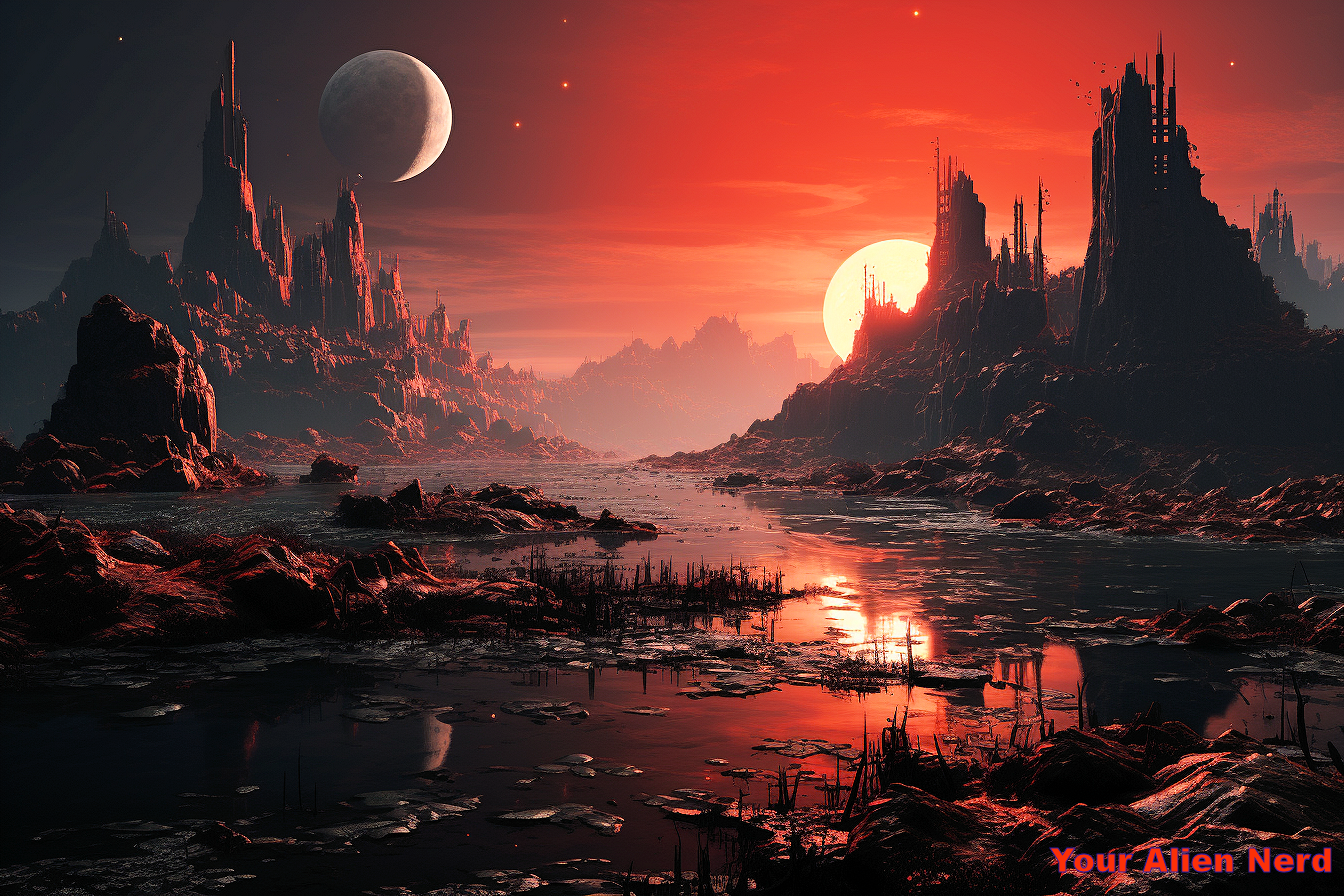
Are there any realistic ways to reach the stars?
In the future, humans will explore the stars. This can happen in a few decades or centuries, but it is inevitable. The long timeline is because the stars are incredibly distant, beyond what we can imagine. Our current technology is not advanced enough to travel through interstellar space. Yet, as we improve our understanding of physics and technology, we will create new propulsion techniques. We will find ways to overcome the barriers that separate us from distant planetary systems.
In this post, I describe five ways to reach Proxima Centauri b, now considered the closest habitable planet to Earth (only about 4.2 ly away). I start with something realistic and then move on to more fantastic possibilities.
Why should we travel to Proxima Centauri b?
Traveling to Proxima Centauri b is extremely important for science, the economy, and human understanding.
Venturing to Proxima Centauri b will help us learn about exoplanets and discover extraterrestrial life. It is located in a region where liquid water probably exists, making it a possible habitat for life. Studying this planet would offer valuable information about its atmosphere, geology, and signs of life. These findings would significantly advance our knowledge of the Universe. They would also deepen our understanding of our place in the cosmos, helping us answer longstanding questions about life beyond Earth.
Journeying to Proxima Centauri b can lead to groundbreaking technologies, industries, and advancements. Developing efficient propulsion systems, life support technologies, and navigation techniques for interstellar travel can have wide-ranging impacts. These include benefits for transportation, energy generation, and resource management on Earth. Investing in these endeavors can drive economic growth, create jobs, and spur technological progress.
Human nature is driven by a strong urge to explore and push boundaries. Traveling to another habitable planet signifies the ultimate achievement, reflecting our curiosity and thirst for knowledge. Interstellar travel symbolizes a future where humanity goes beyond our planet. It unites us and inspires future generations to pursue science and exploration. This effort would have a profound psychological and societal impact, fostering global unity.
In summary, traveling to Proxima Centauri b offers several benefits. We could gain new scientific knowledge. It might help us find alien life. The trip could lead to the creation of innovative technologies. Additionally, it would boost our economy and inspire us to explore beyond our limits. This journey would advance our understanding of the universe, unite humanity, and pave the way for interstellar travel.
What Kind of Planet is Proxima Centauri b?
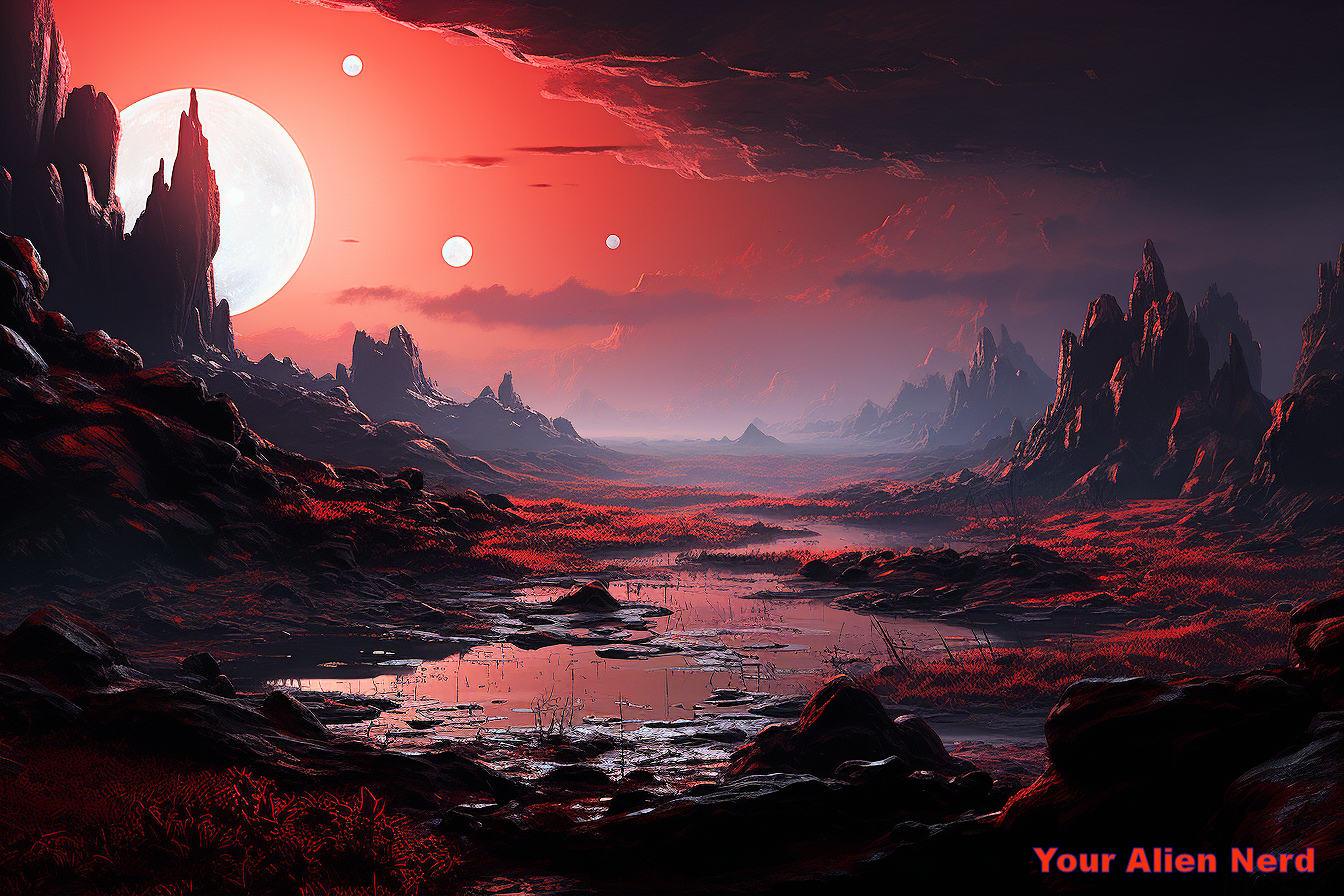
With a minimum mass of at least 1.07 ME (Earth masses; ME = 5.9722 x 1024 kg) and a radius only slightly larger than Earth’s, Proxima b is considered an Earth-like planet. This planet is situated within the habitable zone of Proxima Centauri. Nonetheless, it remains uncertain whether or not it possesses an atmosphere. Proxima Centauri is a flare star. It emits intense electromagnetic radiation. This radiation can strip away any atmospheric layer surrounding the planet.
Proxima Centauri b is not tidally locked if:
- Its eccentricity is higher than 0.1 – 0.06 (that is, the orbit is much flatter than a perfect circle); in this case, the planet would probably enter a Mercury-like 3:2 resonance (three rotations around the axis for every two revolutions around the primary star);
- The planet isn’t symmetrical (e.g., triaxial). In this case, capture into a non-tidally locked orbit would be possible even with low eccentricity.
A non-tidally locked orbit has disadvantages. For example, the planet’s mantle would experience tidal heating, which leads to more volcanic activity and a possible loss of a magnetic field. Protecting the atmosphere from the stellar wind is challenging without a strong magnetic field.
Proxima Centauri b’s atmosphere has two possible scenarios. It lost hydrogen but retained oxygen and carbon dioxide, or it formed farther from its star and still had hydrogen. This distance would have helped preserve its water.
However, red dwarfs are not suitable for supporting life because of several challenges and uncertainties.
Among others:
- The stellar wind from Proxima Centauri is stronger than the Sun’s and may strip parts of the planet’s atmosphere.
- If a planet is tidally locked to its star, the atmosphere can collapse on its night side.
- Proxima Centauri b may not always be in the habitable zone due to its eccentric orbit.
- Proxima Centauri, a star unlike the Sun, had its habitable zone farther away in the past. If a planet like Proxima Centauri b formed in its current orbit, it could have been too close to the star. Water might not have existed there for up to 180 million years. This could have led to a runaway greenhouse effect, causing the planet’s water to evaporate into steam and escape into space, as on Venus.
Still, red dwarfs like Proxima Centauri live for much longer than the Sun. This gives life a lot of time to develop.
How to travel to Proxima Centauri b
Scientists have proposed five ways to travel to Proxima b. One method is the “generation ship.” This method was one of the first ways to reach the stars discussed in scientific literature. It is a potential choice with our current technology.
(a) Generation Ship:
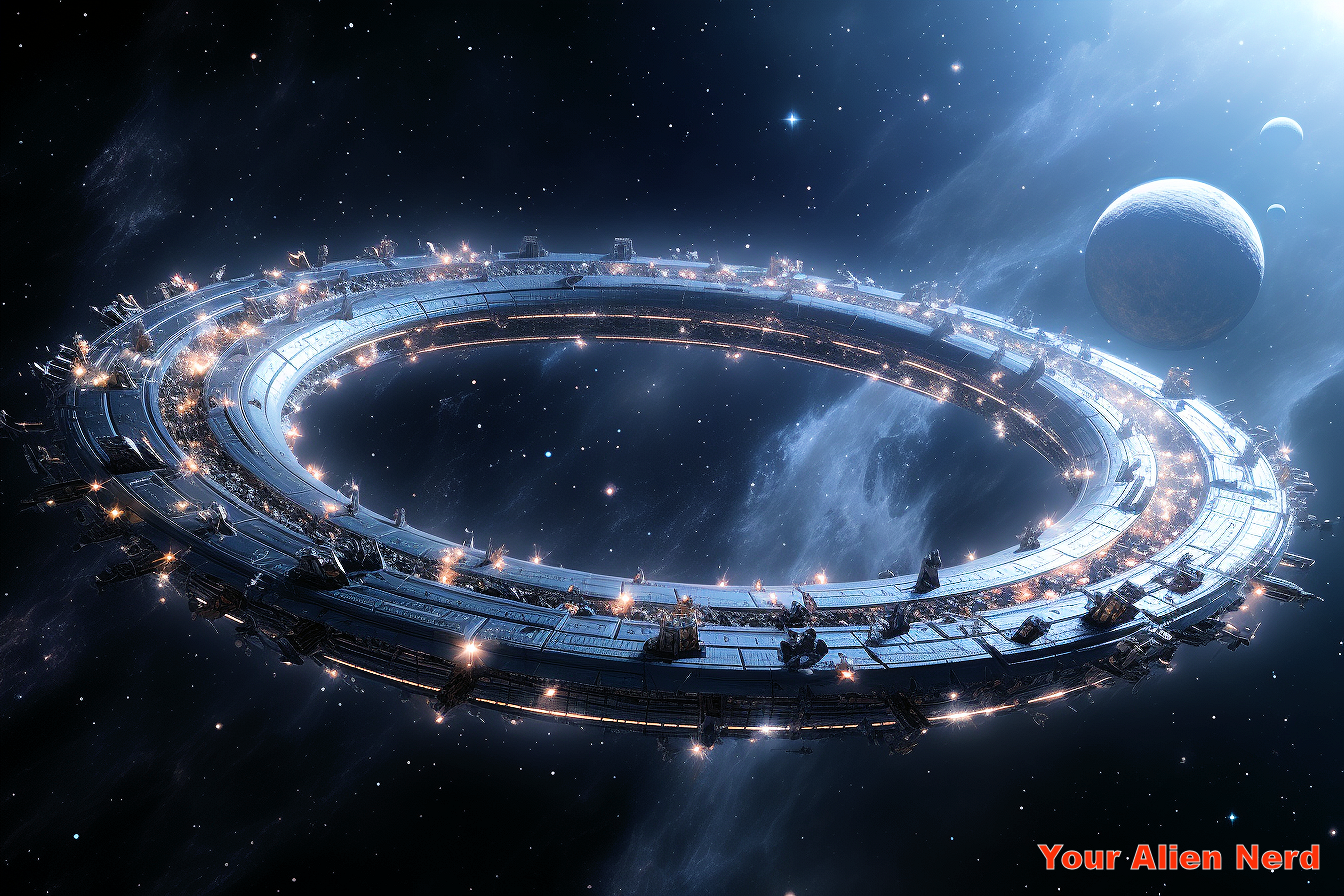
This idea involves creating a spacecraft that can support many generations of people during a long journey. The ship would travel at subluminal speeds, powered by nuclear reactors. It’s hard to know precisely how long it would take for the starship to reach its destination: tens of thousands of years or even more.
With our current technologies, a generation ship is technically possible. Still, it is essential to consider the drawbacks linked to such a venture.
Spending your entire life on a spaceship is challenging for your mental health. You never get to experience life on a planet. Being confined in a limited space can make you feel down. A boring routine contributes to this feeling. Moreover, not interacting with others much can also affect your mood. Also, being unable to see different places can make you feel like you’re missing out. Not trying new things makes you feel disconnected from the natural world.
Health concerns are also significant when planning a generation ship. Extended space travel can lead to problems like weakened bones and muscles, vision impairments, and increased radiation exposure. A lack of proper medical facilities and resources onboard makes it extremely difficult to maintain the crew’s overall health and well-being.
Additionally, the people living on the ship would have to create their own society. They would need to make rules, govern themselves, and develop their way of life. It would be a big challenge to keep everyone happy and treat everyone fairly. There could be problems with people wanting too much power or causing trouble. Thinking about all these things is essential before embarking on a journey like this.
Finally, there are ethical concerns to consider. Is it fair to force future generations into space travel without their consent? Their descendants would have no choice in the matter. They would live and die on the spaceship, missing out on the joys of life on a planet. This raises questions about our responsibility to future generations.
(b) Ion Propulsion:
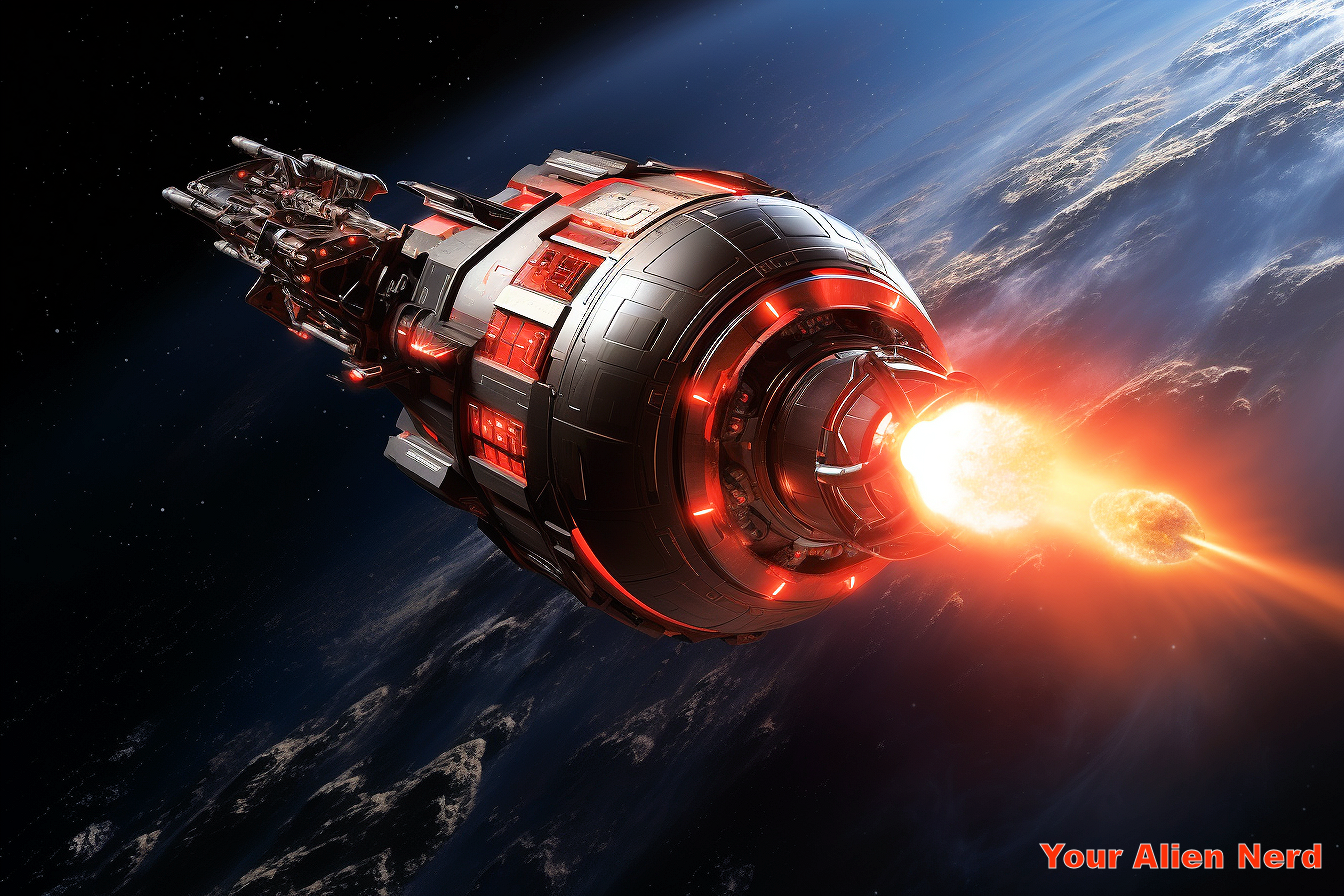
Ion propulsion utilizes electrically charged particles (ions) to generate thrust. This technology is already used in spacecraft missions, like NASA’s Dawn mission. Ion thrusters offer low acceleration but can sustain continuous, efficient propulsion over long periods. With current capabilities, ion propulsion can reduce travel time to Proxima Centauri to a few thousand years. Still, significant advancements in this technology must occur for it to become a practical choice for interstellar travel.
(c) Antimatter Propulsion:
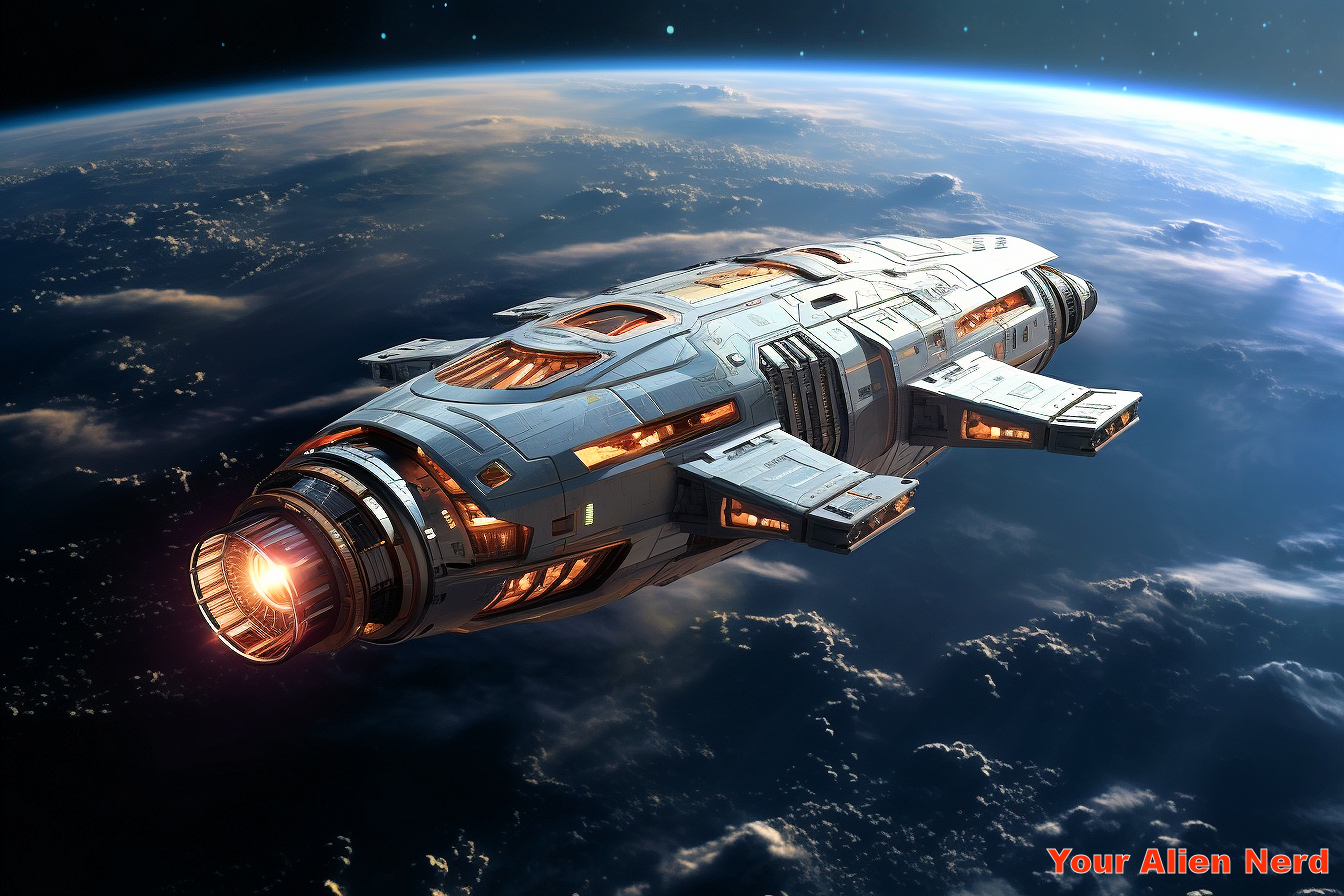
Antimatter propulsion involves using antimatter to generate thrust by converting mass into energy. This technology has great potential for faster space travel. Yet, producing, storing, and containing antimatter is very challenging. At present, only small amounts of antimatter can be made. If we overcome these challenges, we could reach speeds close to the speed of light. This would allow us to travel to Proxima Centauri in several decades or less.
(d) Travel Through a Wormhole:
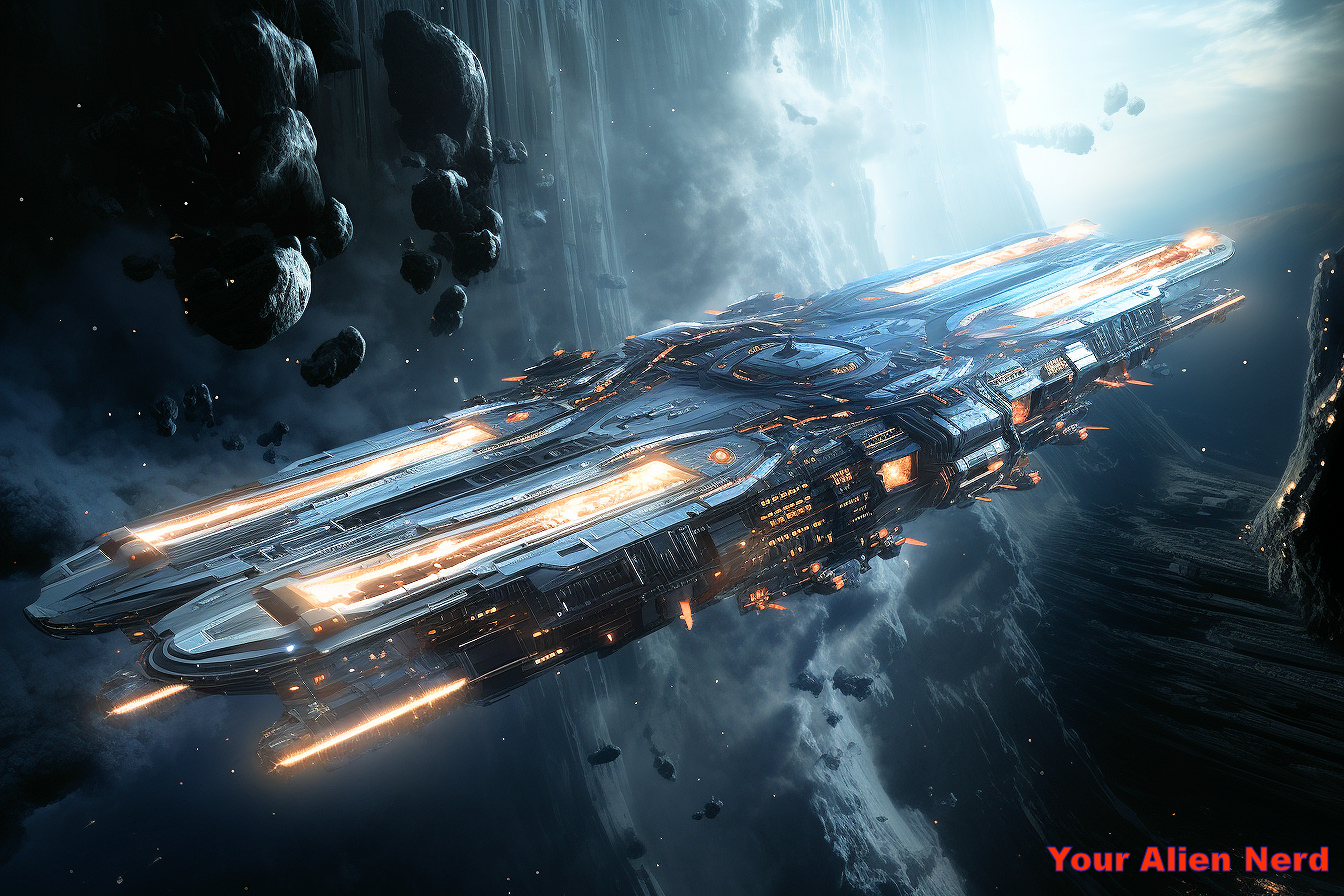
Wormholes involve creating tunnels or shortcuts in spacetime that connect distant locations. There is ongoing research in theoretical physics about wormholes. Nonetheless, there is no definitive consensus on the existence or feasibility of traversable wormholes.
According to conventional theories of general relativity, wormholes would need exotic matter with negative energy density. This type of matter would stabilize the wormholes. Exotic matter has properties contrary to ordinary matter. It has not been observed in nature and is purely speculative. Nevertheless, some theoretical physicists have proposed other models that avoid using exotic matter or colossal energies. One such approach is the concept of “traversable wormholes without exotic matter,” first put forth by Eric Davis in 1997. This model uses a form of matter called “phantom energy.” This is, again, negative energy. Still, it does not violate any physical energy conditions. Phantom energy is a hypothetical concept that arises from quantum field theory and has negative pressure. It remains an area of ongoing theoretical exploration and debate.
If wormholes are discovered and harnessed, they would allow almost instantaneous travel between Proxima Centauri and Earth.
(e) Solar Sail:
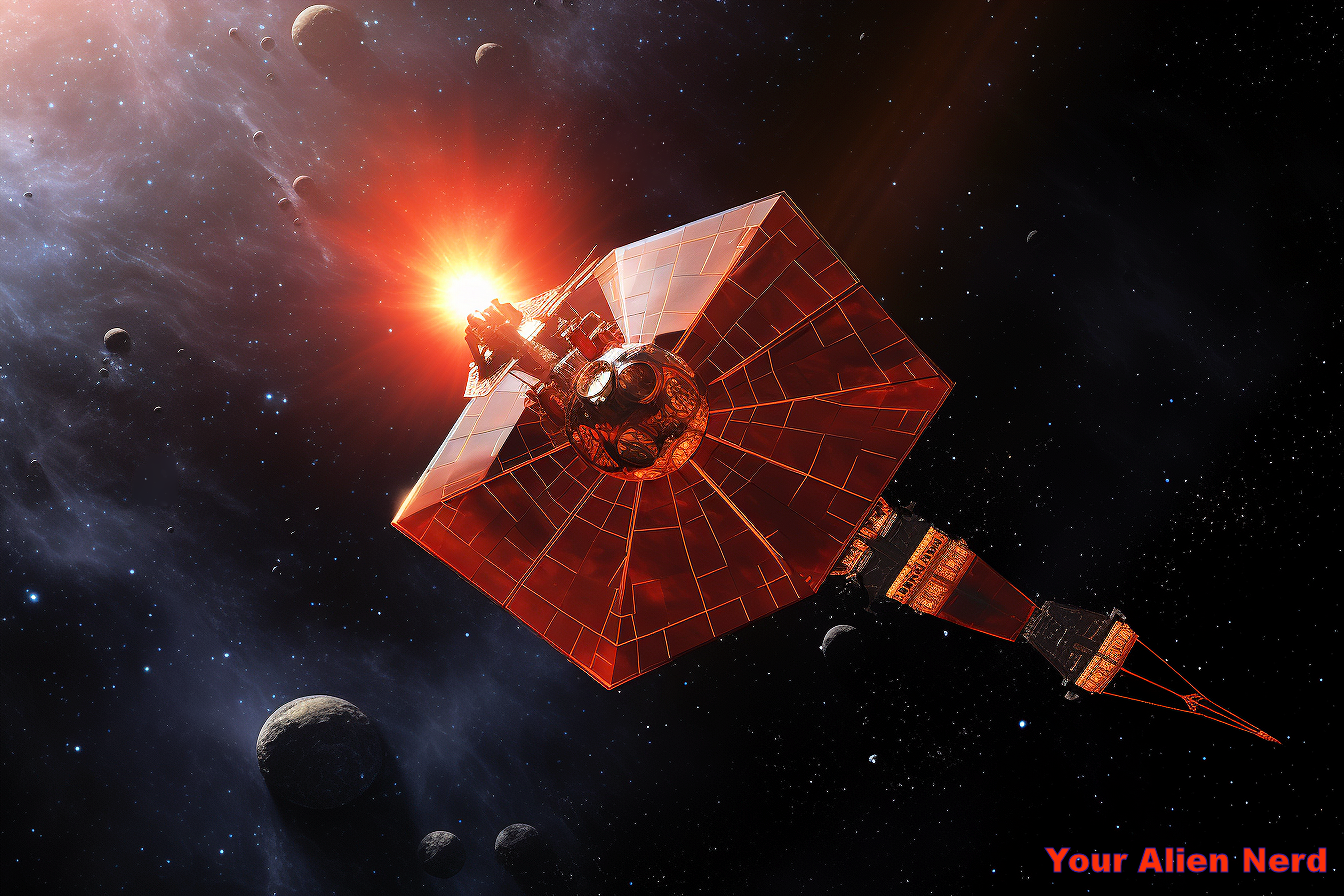
Solar sails are a fascinating spacecraft propulsion technology that harnesses sunlight to propel a spacecraft through space. They work by utilizing the gentle pressure exerted by photons, or particles of light, emitted by the Sun. These photons can transfer momentum to the surface of large reflective sails, creating a slight but continuous acceleration.
One notable project exploring the potential of solar sails is the Breakthrough Starshot Project. This ambitious undertaking aims to send tiny, gram-scale spacecraft to the nearest star system, Alpha Centauri. The envisioned spacecraft would carry ultra-lightweight sails and be propelled by powerful lasers from Earth. These tiny probes use the momentum from the laser beams. They could reach up to 20% of the speed of light. This ability would significantly reduce travel time to another star system.
Finally, we report an intriguing speculation by Harvard astrophysicist Avi Loeb. In 2018, he proposed that the peculiar interstellar object named Oumuamua is an alien spacecraft. Oumuamua means “scout” or “messenger” in Hawaiian. He suggested that a solar sail propels it.
Nonetheless, this speculation remains highly controversial within the scientific community. The available data on Oumuamua is limited. Scientists have also proposed different natural explanations. These include cometary outgassing or a peculiar shape resulting from its formation. Further studies and observations are necessary to decide its true nature definitively.
Here, I review some great Sci-Fi novels exploring how to reach the stars.
Discover more from YOUR ALIEN NERD
Subscribe to get the latest posts sent to your email.


4 Comments
Comments are closed.